01
Choose the monitor
The monitoring period and device type are matched to how often symptoms occur.
Wearable monitoring can capture rhythm changes over time when symptoms are intermittent or do not appear during a short office visit.
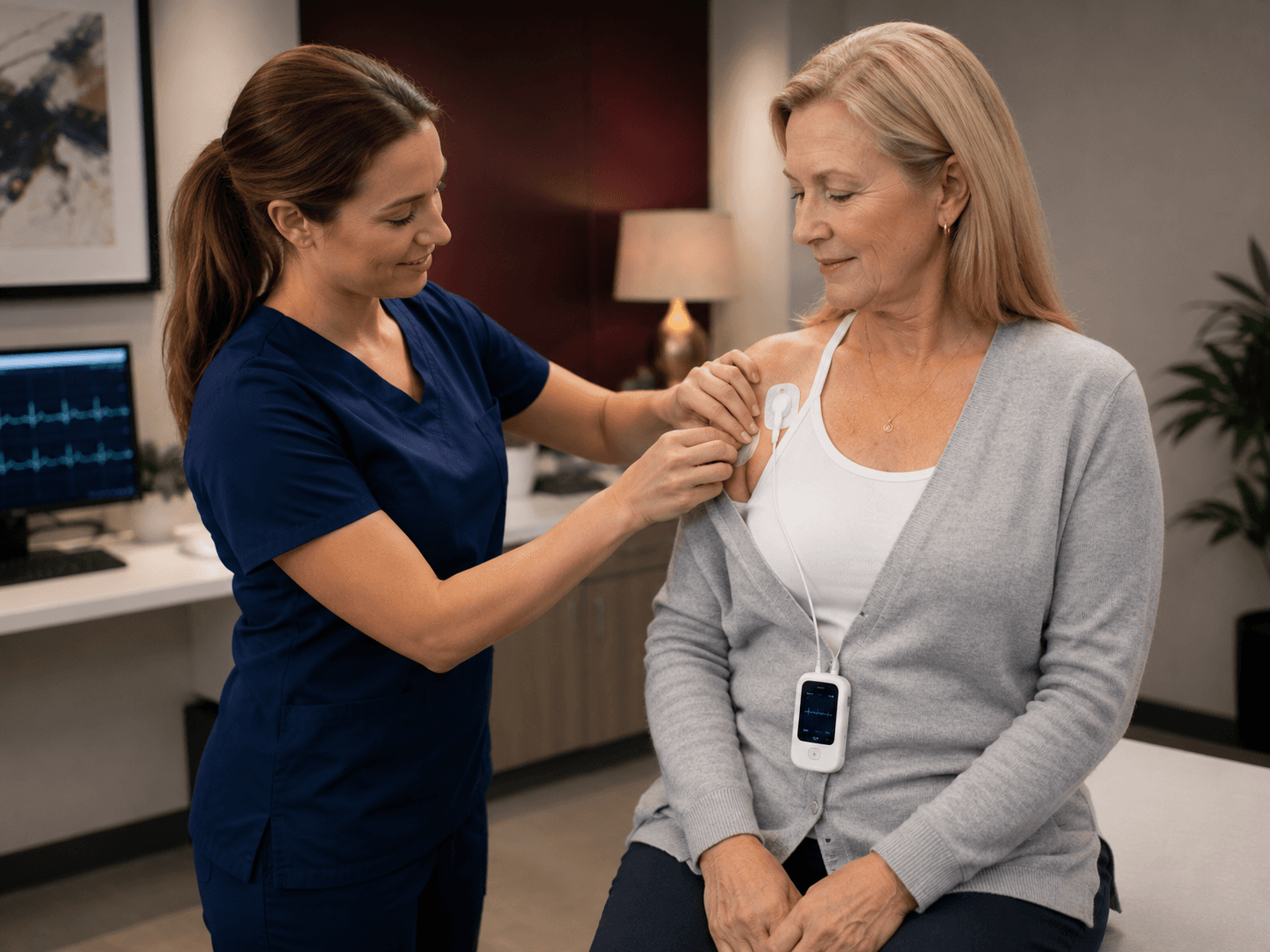
Heart rhythm monitoring records electrical activity over a longer period so intermittent symptoms can be matched with rhythm data. It may be useful for palpitations, dizziness, irregular heartbeat concerns, or atrial fibrillation screening.
The monitoring period and device type are matched to how often symptoms occur.
The wearable device captures rhythm information during normal daily activity.
Results are interpreted and connected to symptom patterns, risk, and treatment options.
An ECG captures a short moment in time. Monitoring can capture rhythm changes that happen later or only occasionally.
It can help identify rhythm patterns consistent with atrial fibrillation or other rhythm concerns when they occur during the recording period.
A proactive approach to heart care for patients who want to understand risk early and build a practical plan before problems become urgent.
Noninvasive ultrasound imaging that helps explain how the heart is structured, how it pumps, and whether valves or pressures need closer attention.
A noninvasive way to evaluate blood flow and vascular health when symptoms, risk factors, or prior results need a clearer explanation.
Let's build your personalized plan for a healthier tomorrow.